
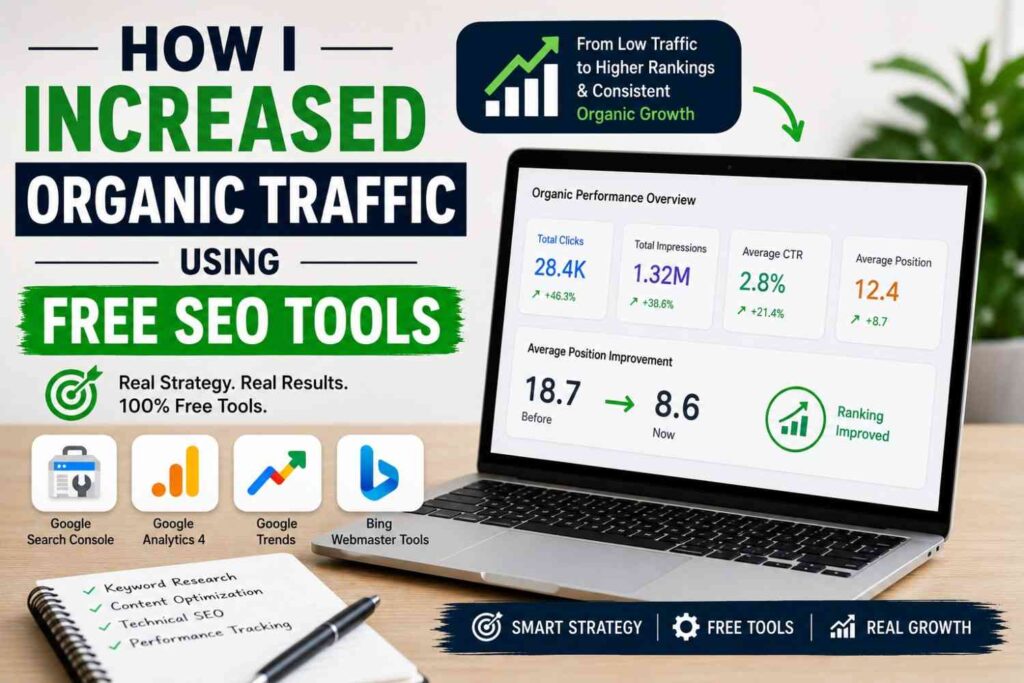
If you’re wondering how to increase organic traffic using free SEO tools, the answer is simple: focus on keyword research, content optimization, technical SEO fixes and performance monitoring using tools like Google Search Console, Google Trends, Bing Webmaster Tools and Google Analytics. By consistently applying these strategies, I was able to improve search visibility, identify ranking opportunities and grow organic traffic without spending money on premium SEO software.
Why I Relied on Free SEO Tools
When I started working on website SEO, I did not have access to expensive tools such as Ahrefs, Semrush or Moz. Instead of waiting for a budget, I decided to use the free resources available from Google and Bing.
What I discovered was that free SEO tools can provide enough data to improve rankings when used correctly. The key is understanding how to interpret the data and turn it into actionable improvements.
My Initial Traffic Situation
Like many website owners, I faced common SEO challenges:
- Low organic traffic
- Poor keyword visibility
- Limited backlink profile
- Few indexed pages
- Lack of content optimization
Rather than publishing random articles, I focused on identifying opportunities where I could achieve measurable SEO improvements using data-driven decisions.
Free SEO Tools I Used
The following tools formed the foundation of my SEO workflow:
Google Search Console
GSC helped me identify:
- Keywords already generating impressions
- Pages with declining traffic
- Click-through rate opportunities
- Indexing issues
- Core Web Vitals concerns
Google Trends
Google Trends allowed me to:
- Discover rising topics
- Compare keyword popularity
- Identify seasonal search patterns
- Create content around growing search demand
Google Analytics 4
GA4 helped me understand:
- Organic traffic performance
- User engagement metrics
- Landing page effectiveness
- Conversion behavior
Bing Webmaster Tools
Although often overlooked, Bing Webmaster Tools provided:
- Additional keyword insights
- Site scan reports
- Technical SEO recommendations
- Indexing information
Step 1: Finding Low-Competition Keywords
One of the biggest mistakes beginners make is targeting highly competitive keywords immediately.
Instead, I searched for keywords that:
- Had clear search intent
- Solved specific problems
- Were relevant to my audience
- Had lower competition levels
Using Google Search Console data, I found keywords where pages were already appearing between positions 8 and 20. These keywords often require optimization rather than completely new content.
This approach produced faster ranking improvements than targeting broad competitive phrases.
Step 2: Optimizing Existing Content
Creating new content is important, but improving existing pages can generate quicker SEO gains.
For each page, I reviewed:
- Title tags
- Meta descriptions
- Heading structure
- Internal links
- Keyword placement
- Content freshness
I also expanded thin content by adding practical examples, FAQs and detailed explanations that directly answered user questions.
This improved both user experience and search engine understanding of the content.
Step 3: Fixing Technical SEO Issues
Technical SEO often prevents good content from reaching its ranking potential.
Using free diagnostic tools, I fixed issues such as:
- Broken internal links
- Duplicate title tags
- Slow-loading images
- Missing meta descriptions
- Crawl errors
- Mobile usability problems
Even small technical improvements can have a noticeable impact on indexing and search performance.
Step 4: Monitoring Performance with Search Console
SEO is not a one-time task.
Every week, I reviewed:
- Total clicks
- Total impressions
- Average position
- Click-through rate
- Newly ranking keywords
When a page started appearing for new keywords, I updated the content to better match search intent and strengthen topical relevance.
This continuous optimization process helped sustain organic growth over time.
Results and Key Learnings
The most important lesson I learned is that SEO success does not require expensive software.
Free tools provide enough data to:
- Discover ranking opportunities
- Improve existing content
- Fix technical problems
- Measure performance
- Build topical authority
The real advantage comes from consistency rather than the tools themselves.
Websites that regularly publish helpful content, optimize pages and monitor performance are more likely to achieve sustainable organic growth.
Final Thoughts
If you want to increase organic traffic using free SEO tools, start with Google Search Console, Google Trends, Google Analytics and Bing Webmaster Tools. Focus on low-competition keywords, optimize existing content, resolve technical issues and track performance consistently.
SEO is not about finding a secret tool. It is about understanding user intent, creating valuable content and continuously improving your website based on real data. Even without a paid SEO subscription, these strategies can help you build stronger organic visibility and long-term search traffic.
Auther
I’m Sameer, an SEO professional sharing practical SEO strategies, case studies and optimization techniques. Learn more
Google Search Console is the most valuable free SEO tool for beginners.
Yes, when used correctly, free SEO tools can significantly improve rankings and traffic.
Most websites start seeing improvements within 3 to 6 months of consistent SEO work.
It is one of the most important tools but works best alongside Analytics and Trends.
No, many websites achieve strong rankings using only free SEO tools.