
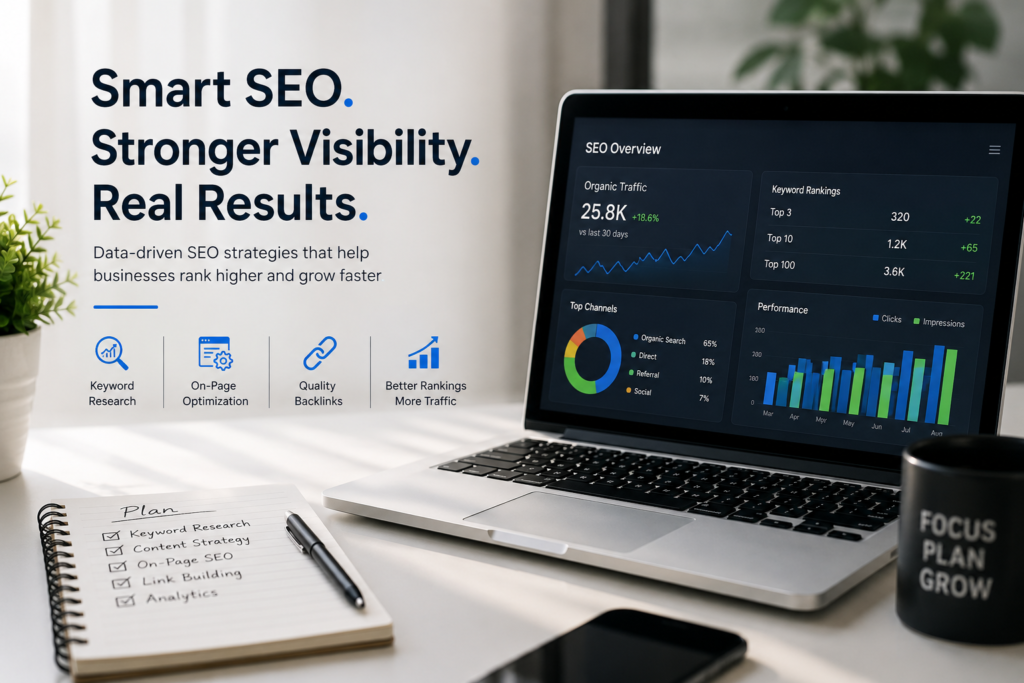
A professional SEO website should do more than showcase skills. It should clearly communicate expertise, demonstrate real-world experience, provide useful information, and make it easy for visitors and search engines to understand the website structure.
For an SEO professional such as Sameer, a simple and well-organized website can create a strong foundation for personal branding, professional opportunities, and organic search visibility. A minimal sitemap consisting of five core pages—Home, Portfolio, Blog, Contact, and Privacy Policy—can provide everything needed to build an effective SEO portfolio website.
Why Website Structure Matters for SEO
Website structure determines how users navigate a website and how search engines discover and understand its content. A logical structure helps Google crawl important pages efficiently while allowing users to find relevant information with fewer clicks.
A simple website should therefore have descriptive URLs, clear navigation, properly organized headings, internal links, fast-loading pages, mobile-friendly design, and unique content on every important page.
1. Homepage — Establish Your Professional Identity
The Homepage should immediately explain who Sameer is, what he specializes in, and what visitors can expect from the website.
The page can introduce his experience in SEO and digital marketing, highlight key skills such as technical SEO, on-page SEO, keyword research, content strategy, SEO analytics, and website optimization, and provide links to selected projects and articles.
The Homepage should also contain clear calls to action, such as View Portfolio, Read SEO Blogs, or Contact Me.
From an SEO perspective, the page should have one clear H1, descriptive title and meta description, optimized images, relevant internal links, and concise content that naturally incorporates terms related to SEO and digital marketing.
2. Portfolio — Demonstrate Practical SEO Experience
The Portfolio page is where expertise becomes evidence.
Instead of simply listing skills, the page should showcase real SEO projects, website audits, content strategies, technical improvements, keyword research, competitor analysis, or digital marketing campaigns.
Where appropriate, individual projects can explain the objective, challenge, strategy, implementation, and measurable outcome.
This type of content helps demonstrate first-hand experience and makes the website more credible to recruiters, businesses, and potential clients.
A strong portfolio structure could be:
Project → Objective → SEO Strategy → Implementation → Results → Key Learnings
3. Blog — Build SEO Topical Authority
The Blog should become the website’s knowledge hub.
Instead of publishing large quantities of generic articles, focus on useful topics that demonstrate genuine SEO knowledge. Potential categories include:
- Technical SEO
- On-Page SEO
- Keyword Research
- Content Strategy
- Google Search
- SEO Tools
- Local SEO
- Digital Marketing
- SEO Case Studies
Articles should answer specific questions and search intents rather than being written solely to target keywords.
Relevant articles should also be internally linked to one another. For example, an article about keyword research can link to content about on-page SEO, while a technical SEO article can link to a website audit case study.
Over time, this interconnected content can help establish topical depth around SEO.
4. Contact — Create a Clear Conversion Path
The Contact page should make communication straightforward.
A simple contact form, professional email address, LinkedIn profile, and relevant social profiles can be included. Avoid asking for unnecessary information because excessive form fields can reduce conversions.
The page should also contain a clear heading and explain what visitors can contact Sameer about, such as SEO projects, professional opportunities, collaborations, or digital marketing discussions.
5. Privacy Policy — Establish Transparency
The Privacy Policy page explains how visitor information is collected and used.
It becomes particularly important when a website uses contact forms, Google Analytics, cookies, advertising platforms, or other tracking technologies.
The policy should accurately reflect the tools and data practices used by the website. It should not be copied blindly from another website.
Recommended SEO Sitemap
A clean URL structure could look like this:
/
├── /portfolio/
├── /blog/
├── /contact/
└── /privacy-policy/
The navigation should remain simple, with the five primary pages accessible from the main menu. Blog articles can sit below /blog/, while individual portfolio projects can use a consistent structure such as /portfolio/project-name/.
An XML sitemap should also be generated for search-engine discovery, while the website’s robots.txt file should allow important pages to be crawled and prevent unnecessary URLs from being indexed.
Internal Linking Strategy
Internal linking should connect the website’s most important pages naturally.
Homepage → Portfolio → Individual Projects
Homepage → Blog → Related Articles
Blog → Portfolio → Relevant Case Study
Portfolio → Contact → Inquiry
This creates a logical user journey while helping search engines understand relationships between pages.
Final Thoughts
A successful SEO portfolio website does not need dozens of pages. A focused structure with Home, Portfolio, Blog, Contact, and Privacy Policy can provide a strong foundation when every page serves a clear purpose.
The real SEO advantage comes from combining a logical sitemap with useful original content, strong internal linking, technical SEO, mobile usability, fast performance, structured data, and evidence of real-world experience.
For Sameer’s website, the long-term objective should be to build a recognizable personal SEO brand rather than simply rank for individual keywords. Publishing genuinely useful SEO insights, documenting practical projects, and continuously improving the website can gradually build experience, expertise, authority, and trust—the foundations of a sustainable organic search strategy.